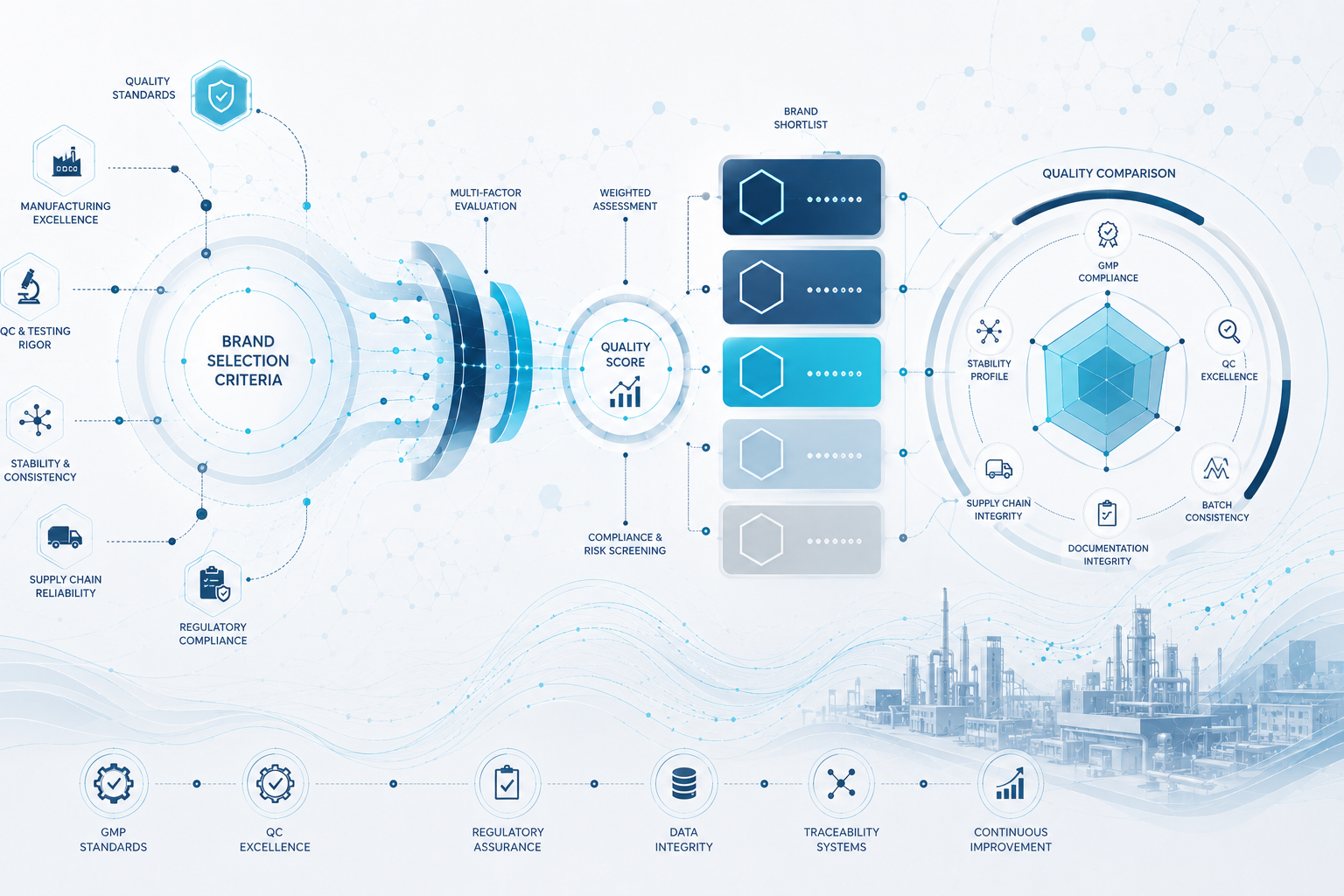
Understanding avanafil brand differences is essential for assessing product consistency and quality. Manufacturing standards, GMP certification, QC processes, formulation types (tablets, Soft Tabs, ODT), packaging integrity, and stability testing all influence how reliably a product performs. This non‑commercial guide explains these factors in detail, helping users navigate variations between Indian and international manufacturers (Indian Brands). It also outlines how formulation technologies such as Soft Tabs and ODT affect dissolution and convenience, and why packaging clarity and stability indicators matter for authenticity and safe sourcing (Online Safety). The goal is to provide structured, factual insight into avanafil brand selection without promoting any specific manufacturer.
Avanafil brand selection plays a critical role in ensuring product consistency, predictable onset, and reliable therapeutic performance. Although all avanafil formulations share the same core mechanism of action — selective PDE5 inhibition (Mechanism) — manufacturing standards vary significantly across producers. Differences in GMP compliance, equipment calibration, solvent purity, and excipient sourcing directly influence tablet uniformity, dissolution behavior, and stability. Brands operating under strict GMP frameworks typically demonstrate tighter batch‑to‑batch variability, which supports more consistent pharmacokinetic outcomes.
Quality‑control intensity is another major differentiator. Some manufacturers perform expanded impurity profiling, accelerated stability testing, and multi‑stage dissolution checks, while others rely on minimal regulatory‑required QC. These variations affect how reliably the active ingredient disperses, especially in advanced formulations such as ODT and Soft Tabs. Even when the labeled dose is identical, differences in granulation methods, coating technology, and disintegration profiles can lead to noticeable differences in user experience.
Formulation technology further shapes brand performance. Standard tablets, rapidly dissolving ODT formats, and chewable Soft Tabs each use distinct excipient systems and manufacturing workflows. These choices influence absorption speed, mucosal exposure, and overall consistency. This page provides non‑commercial, factual guidance to help users understand how brand‑level differences impact real‑world reliability (Overview).
Avanafil brand reliability depends heavily on the manufacturing standards applied during production. Good Manufacturing Practice (GMP) certification ensures that each batch is produced under controlled conditions, using validated equipment, calibrated processes, and pharmaceutical‑grade excipients. Manufacturers operating under strict GMP frameworks maintain consistent granulation, blending, compression, and coating parameters, which directly influence dissolution behavior and dose uniformity. This consistency is essential for predictable pharmacokinetics and stable therapeutic performance.
International ISO certifications further reinforce production reliability by standardizing quality management systems, documentation practices, and risk‑mitigation procedures. ISO‑aligned facilities typically demonstrate stronger traceability, cleaner production environments, and more rigorous deviation‑handling protocols. These factors reduce variability between batches and help ensure that avanafil tablets, Soft Tabs, and ODT formulations maintain their intended potency throughout their shelf life.
Stability testing is another critical component of GMP compliance. Manufacturers expose avanafil products to controlled heat, humidity, and light conditions to verify long‑term integrity. Proper stability data ensures that the medication remains effective during storage and transport, especially when purchased online. Users evaluating brand differences should also consider authenticity and safe sourcing practices, as outlined in Online Safety.
| Standard | Description | Impact |
|---|---|---|
| GMP | Good Manufacturing Practice | Ensures consistent quality |
| ISO | International quality certification | Improves production reliability |
| Stability Testing | Heat/humidity resistance | Ensures long‑term integrity |
Avanafil is manufactured in several formulation types, each designed to optimize dissolution speed, convenience, and user experience. Standard film‑coated tablets remain the most common format, offering predictable disintegration and stable absorption profiles. They are typically swallowed with water and may show mild sensitivity to food intake, depending on excipient composition and coating thickness.
Soft Tabs provide a different performance profile. These chewable or rapidly‑dispersing formulations use specialized excipients that break down quickly in the oral cavity, bypassing part of the gastrointestinal dissolution process. Soft Tabs are valued for convenience and faster perceived onset, though their absorption can be more sensitive to saliva pH and oral mucosal exposure. They are often preferred by users seeking discreet administration without water.
Orally Disintegrating Tablets (ODT) dissolve directly on the tongue, using super‑disintegrants and porous matrix structures to accelerate breakdown. ODT formulations minimize food‑related variability and offer consistent absorption even when taken shortly after meals. Their manufacturing requires precise control of moisture content and compression force, making brand‑level differences more noticeable.
Understanding these formulation distinctions helps users evaluate which avanafil brand aligns best with their needs. Differences in excipient systems, disintegration profiles, and dissolution kinetics can meaningfully influence real‑world performance.
Packaging quality is a critical indicator of avanafil brand reliability, especially when evaluating products purchased online. High‑grade blister materials protect tablets from moisture, oxygen, and temperature fluctuations, preserving stability throughout the product’s shelf life. Manufacturers using aluminum‑aluminum (Alu‑Alu) or premium PVC/PVDC blisters typically achieve stronger barrier protection compared to low‑grade plastics.
Printing clarity is another essential factor. Authentic avanafil brands display sharp, smudge‑free printing with consistent font weight, accurate color alignment, and no spelling errors. Batch numbers, manufacturing dates, and expiry dates should be clearly visible and match the information on the outer carton. These identifiers allow users to verify traceability and confirm that the product originates from a regulated facility.
Many reputable manufacturers also include holograms, micro‑text, or tamper‑evident seals to prevent counterfeiting. These security features help users distinguish legitimate products from low‑quality imitations. Packaging integrity directly affects stability: compromised blisters can lead to moisture ingress, reduced potency, and inconsistent dissolution.
Users comparing avanafil brands should consider packaging quality alongside pricing factors, as outlined in Price Factors. Strong packaging is not only a marker of authenticity but also a practical safeguard for long‑term product reliability.
Avanafil stability is a core indicator of brand reliability, determining how well the medication maintains potency and structural integrity throughout storage, transport, and real‑world use. Stability testing exposes tablets, Soft Tabs, and ODT formulations to controlled heat, humidity, and light conditions to evaluate degradation pathways, moisture sensitivity, and excipient performance. Brands with robust stability programs typically demonstrate slower impurity formation, more predictable dissolution, and longer shelf life.
Heat‑stress testing verifies that avanafil remains chemically stable during transport, especially in regions with high ambient temperatures. Humidity testing evaluates blister protection and excipient resilience, ensuring tablets do not soften, swell, or lose structural integrity. Light‑exposure studies confirm that printing, coatings, and active ingredients remain stable under UV and visible light.
These stability parameters are essential for users purchasing avanafil online, where storage conditions may vary across distributors. Strong stability data helps ensure that the product performs consistently from the moment it leaves the manufacturer until it reaches the end user. For guidance on safe sourcing and authenticity verification, see Online Safety.
Indian and international avanafil brands differ substantially in regulatory oversight, production scale, formulation diversity, and packaging sophistication. India’s pharmaceutical ecosystem is built around high‑volume generic manufacturing, enabling competitive pricing and broad availability. Many Indian manufacturers operate under WHO‑GMP or national GMP frameworks, but regulatory intensity varies, leading to differences in QC depth, impurity profiling, and documentation standards. International brands, particularly those produced in the U.S., EU, or Japan, typically follow stricter EMA or FDA guidelines, requiring extensive stability data, serialization, and post‑market surveillance.
Packaging style also differs. Indian brands range from basic PVC/PVDC blisters to premium Alu‑Alu formats, while international brands more consistently use high‑barrier materials, tamper‑evident seals, and advanced anti‑counterfeit elements. These packaging variations influence moisture protection, shelf life, and user confidence.
Formulation diversity is generally broader among Indian manufacturers, who frequently produce tablets, Soft Tabs, and ODT variants to meet different user preferences. International brands tend to focus on highly standardized tablet formulations with extremely tight dissolution and pharmacokinetic consistency.
QC processes represent another major distinction. Top‑tier Indian brands perform expanded impurity profiling and accelerated stability testing, but variability exists across the market. International brands typically maintain uniform QC intensity across all batches. For a detailed overview of Indian manufacturers and their formulation options, visit Indian Brands.
Authenticity verification is essential when evaluating avanafil brands, especially in markets where counterfeit PDE5 inhibitors are common. Packaging quality is one of the strongest indicators of legitimacy. Genuine products use high‑grade blister materials with uniform sealing, consistent foil thickness, and clean, smudge‑resistant printing. Blurry text, uneven color tones, or misaligned logos often signal non‑authentic production. Users should also inspect the outer carton for sharp printing, correct branding, and regulatory statements.
Batch numbers, manufacturing dates, and expiry dates must be clearly printed and traceable. Authentic manufacturers maintain batch‑level documentation that aligns with GMP requirements, allowing users to verify production details through customer support channels or regulatory databases. Missing or inconsistent batch codes are a major red flag and should prompt users to avoid the product.
GMP markings — including facility codes, license numbers, and standardized layout elements — further confirm that the product originates from a certified manufacturer. Some brands also include holograms, micro‑text, or tamper‑evident seals to prevent counterfeiting. These features help distinguish legitimate avanafil from low‑quality imitations. For broader guidance on safe sourcing and risk mitigation, visit Online Safety.
Selecting an avanafil brand involves evaluating several non‑commercial factors that influence consistency and real‑world performance. Manufacturing reliability, formulation type, packaging clarity, and stability indicators all contribute to how predictably a product behaves. Brands with strong GMP compliance and rigorous QC processes typically deliver more uniform dissolution and stable pharmacokinetics across batches.
Formulation type also matters. Standard tablets, Soft Tabs, and ODT formats differ in dissolution speed, convenience, and sensitivity to food intake. Users should consider which format aligns best with their preferences and usage patterns. Packaging clarity — including readable batch codes, sharp printing, and intact blisters — provides additional assurance of authenticity and proper storage conditions.
Stability indicators such as moisture resistance, heat tolerance, and long‑term integrity help determine whether a brand maintains potency throughout its shelf life. This page offers structured, factual guidance to help users make informed decisions without commercial bias. For a broader overview of avanafil and its therapeutic role, visit Overview.
Avanafil brand selection matters because manufacturing standards, excipient quality, formulation technology, and stability controls vary between producers. These differences influence dissolution speed, batch consistency, impurity levels, and real‑world reliability. Even when the active ingredient is identical, variations in production methods can lead to noticeable differences in onset, potency, and overall user experience. Choosing a reliable brand helps ensure predictable therapeutic results.
GMP‑certified brands generally offer more consistent quality because they follow strict production protocols, validated equipment processes, and standardized documentation. These requirements reduce batch variability, improve impurity control, and ensure that each dose meets defined specifications. While GMP does not guarantee superiority, it significantly increases the likelihood of stable dissolution, reliable potency, and predictable pharmacokinetics across multiple batches.
Indian brands often provide broader formulation diversity and competitive pricing due to large‑scale generic manufacturing. International brands typically follow stricter regulatory frameworks, offering tighter QC controls, more advanced packaging, and highly standardized dissolution profiles. Both categories include reputable manufacturers, but variability is generally higher among Indian brands, making QC depth and packaging quality important factors when evaluating product reliability.
Soft Tabs can differ significantly between brands because manufacturers use different excipient systems, flavoring agents, and disintegration technologies. These variations influence how quickly the tablet breaks down in the mouth, how consistently the active ingredient is absorbed, and how sensitive the formulation is to saliva pH. As a result, onset speed and user experience may vary noticeably across Soft Tab brands.
ODT formulations are not always consistent across manufacturers because they rely on specialized super‑disintegrants, moisture‑controlled matrices, and precise compression techniques. Differences in these components affect how quickly the tablet dissolves on the tongue and how reliably the active ingredient is absorbed. Some brands achieve very fast disintegration, while others may dissolve more slowly or show greater sensitivity to storage conditions.
Authentic packaging typically features sharp printing, consistent color alignment, clear batch numbers, and intact blister seals. High‑quality materials such as Alu‑Alu blisters provide strong moisture protection. Legitimate manufacturers also include accurate expiry dates, regulatory statements, and sometimes holograms or tamper‑evident elements. Poor printing, spelling errors, or damaged blisters are common signs of non‑authentic products.
Stability varies because manufacturers use different excipients, coating technologies, and blister materials. Some brands perform extensive accelerated stability testing, while others rely on minimal regulatory requirements. Variations in moisture resistance, heat tolerance, and impurity formation can lead to differences in shelf life and long‑term potency. Strong stability programs help ensure consistent performance during storage and transport.
QC intensity differs widely across manufacturers. Some conduct multi‑stage dissolution testing, expanded impurity profiling, and detailed stability studies, while others follow only basic regulatory requirements. Strong QC programs ensure tighter batch uniformity, fewer deviations, and more predictable pharmacokinetics. Variability in QC is one of the main reasons avanafil brands can differ in reliability and user experience.
Yes, dissolution speed can vary due to differences in excipients, granulation methods, coating thickness, and formulation type. Soft Tabs and ODT formats typically dissolve faster than standard tablets, but even within the same category, brands may show different breakdown rates. Faster dissolution often correlates with quicker absorption, but consistency depends on manufacturing precision and QC controls.
Batch codes are essential for verifying authenticity, tracing production history, and confirming regulatory compliance. They allow users and regulators to identify the exact manufacturing batch, check for recalls, and validate expiry dates. Missing or inconsistent batch codes are a major red flag and often indicate poor QC practices or non‑authentic products. Reliable brands always include clear, traceable batch information.
GMP affects product quality by enforcing strict production standards, validated processes, and comprehensive documentation. These controls ensure that each batch meets defined specifications for potency, purity, and dissolution. GMP‑compliant facilities maintain cleaner environments, better equipment calibration, and stronger deviation management, all of which contribute to more reliable avanafil performance and reduced batch variability.
Price differences arise from variations in manufacturing costs, QC intensity, packaging quality, regulatory requirements, and formulation technology. Brands using premium blisters, advanced excipients, or extensive stability testing often have higher production expenses. Regional economic factors and distribution models also influence pricing. Lower‑cost brands may reduce expenses by simplifying packaging or minimizing QC depth, leading to broader variability in product consistency.